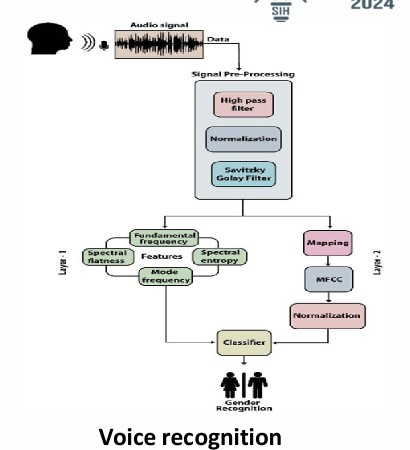
CNNs analyze images by using convolutional layers to detect features like edges and shapes, followed by pooling layers to downsample and focus on the most relevant information. Fully connected layers then classify the images. For voice recognition, CNNs convert audio signals into spectrograms, capturing frequency content over time. The network learns features from the spectrogram, such as phonemes, using convolutional and pooling layers, enabling it to recognize spoken words or sounds.
Improved image recognition - CNNs can help in identifying objects or people in images, which is useful for detecting unwanted individuals in distress situations. Increased accuracy and alerts - CNNs can reduce false positives by distinguishing between actual threats and begin activities. Increased safety and security - By enhancing threat detection and response capabilities, CNN-powered apps can significantly improve personal safety, particularly for women in vulnerable situations. Reduced need for physical patrols - By improving the efficiency of monitoring and response through CNN-powered apps, there may be a reduced need for constant physical patrols.